
In the frenzied world that is young China, two trends are currently stealing the spotlight: that golden glow and the gleaming edge of guzi culture. Say what now?
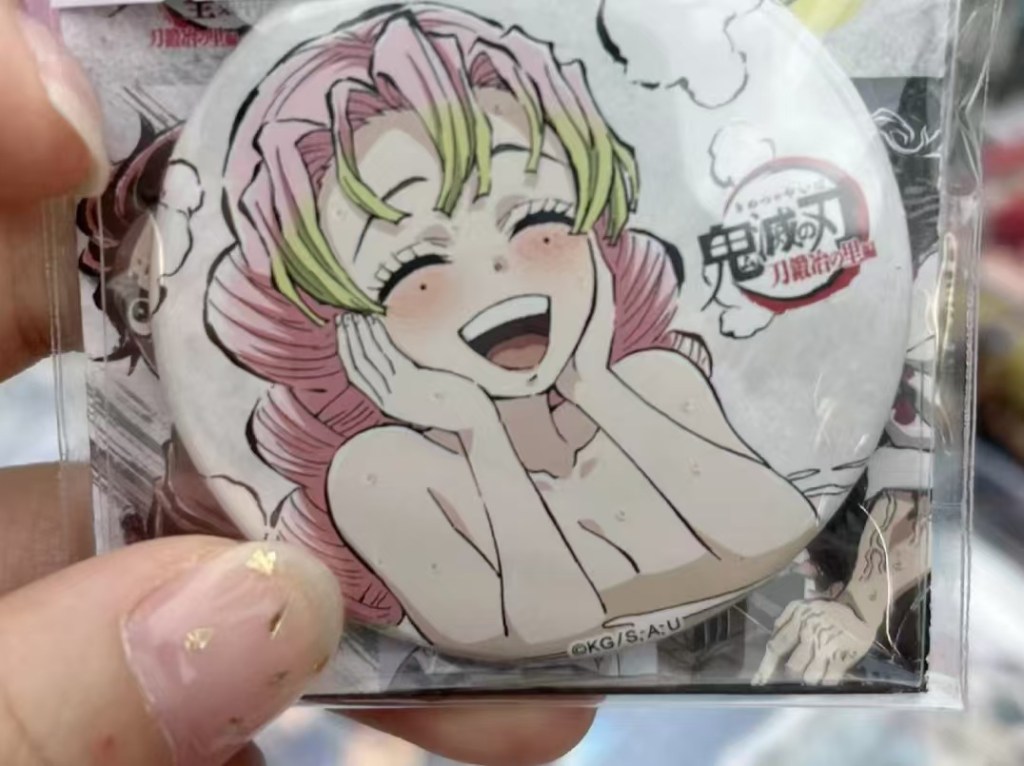
An anime-inspired guzi (“goods”) badge.
The Goods: Where Merch Meets Magic
What’s the deal with guzi, you ask? For China’s youth, these anime-inspired trinkets are more than just shiny distractions—they’re lifelines in a high-pressure world. These “goods” (谷子| gǔzi, a cheeky homophone for “grain” in Chinese) have morphed into cultural staples, with fans referring to their purchases as “eating goods.” Forget bread and butter; guzi is the soul food of Gen Z and Gen A (those born after 2010).
Guzi merch, derived from animation, comics, games and novels (ACGN), is taking the Chinese market by storm. Think badges, figurines, keychains, and the ever-addictive blind boxes that keep fans guessing. Prices range from pocket change to small fortunes, with limited editions fetching jaw-dropping sums. According to data analysis company iiMedia Research, the guzi economy surged to $23 billion in 2024, with forecasts projecting it will hit $42 billion by 2029.
That’s not just growth; that’s a full-blown cultural phenomenon.
But it’s not all sunshine and stardust. The guzi market’s wild success has its challenges. Shop owners warn of counterfeiters undercutting quality, while homogenization plagues the scene—how many Pikachu badges can one market take?
Yet, analysts see potential. The trick? Keeping the hype real while innovating to avoid burnout.
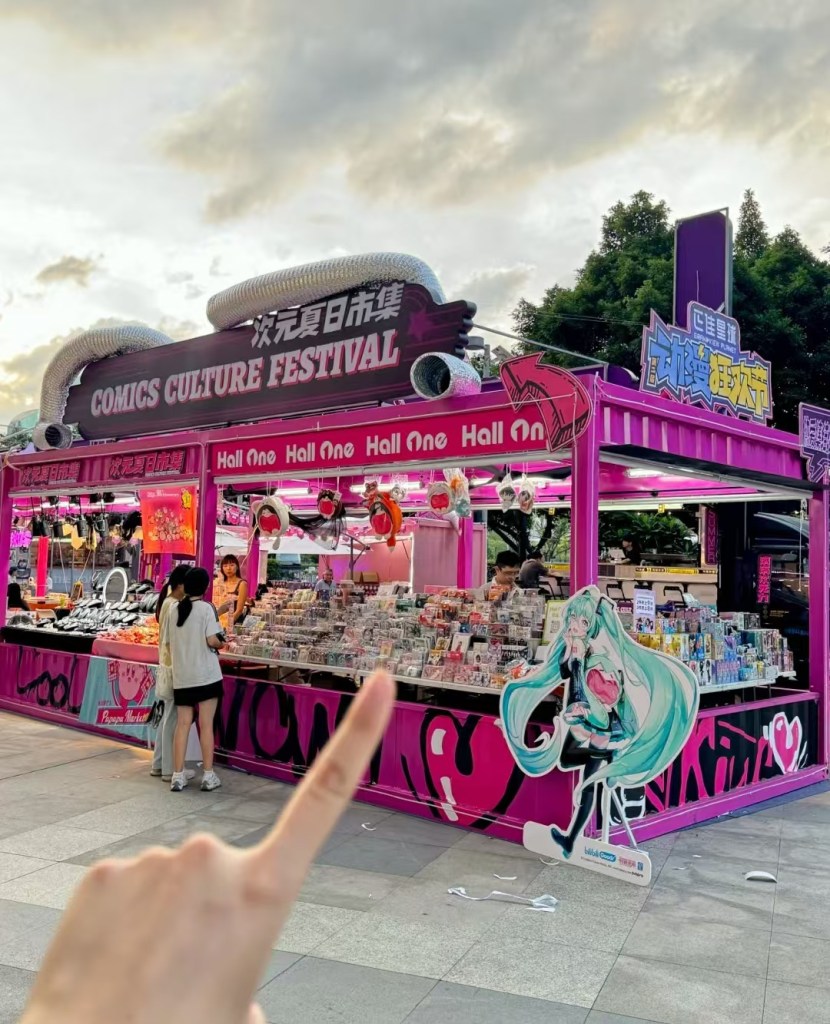
A guzi store in Guangzhou, Guangdong Province, on January 8. Image via Xiaohongshu, a Chinese lifestyle bible and e-commerce platform.
For many young Chinese, browsing guzi shops isn’t just a weekend ritual; it’s therapy. Spending $7 to $27 on figurines or accessories is a small price for moments of happiness amidst academic grind. Moreover, guzi connects fans, offering a sense of belonging and a way to express themselves. It’s not just merch; it’s identity—one blind box at a time.
f brands can dodge fakes and lean into originality, guzi will remain a staple for China’s youth—a quirky, heartfelt “grain” feeding the soul of a generation.
It’s not just merch—it’s a statement. For China’s youth, guzi is about more than the collectible value or cool factor. According to Tang Qiao, an expert from the Chinese Academy of Social Sciences, told English-language newsweekly Beijing Review earlier this month that guzi symbolizes the deep loyalty fans feel toward their favorite anime, online literature, or film franchises. It’s not just stuff to buy; it’s a badge of identity, a conversation starter, and a way to show the world what you’re passionate about.
But it’s also a social glue. Young people aren’t just collecting guzi for themselves—they’re building connections with fellow fans. Whether it’s posting collections on social media or hitting up guzi stores together, the act of collecting has become a way to bond, share experiences, and feel like part of something bigger. As one saying goes, “If you don’t show off your guzi, it’s like you never bought it.”
These items aren’t just for display—they’re about community, self-expression, and finding your tribe in a world that’s constantly moving.

“Time to zhuazhou [the ancient custom where a baby’s first birthday predicts their future through object choices]” Image via Xiaohongshu
The Gold: Getting a Glow-Up
The buzzword on China’s streets? Gold—but not your grandma’s lock-and-key kind. The cultural spark igniting China’s “Gold Rush 2.0” is a fusion of deep traditions and millennial style. Zhuazhou (抓周| zhuā zhōu, literally “catching the year”), the ancient custom where a baby’s first birthday predicts their future through object choices, is getting a golden upgrade. Designers like Li Gen at Chinese go-to jewelry store Caibai Jewelry are reimagining zhuazhou objects—seals, abacuses, and hammers—into gold pendants with a modern twist.
It’s tradition, but make it fashion. Think baby bling that carries a story and a slice of history.
Remember the OG Chinese Gold Rush of 2013? Chinese dama (大妈| dàmā, “aunties” or “middle-aged women”) bought 300 tons of gold in weeks, shocking Wall Street. Fast-forward to now, and the baton’s been passed to the youth. Gold isn’t just an investment anymore; it’s a vibe. It’s wedding dowries transformed into collectible gold figurines. It’s Chinese zodiac-inspired pendants symbolizing harmony and connection. The shiny metal is no longer a symbol of “old wealth” but a statement of personality and pride.
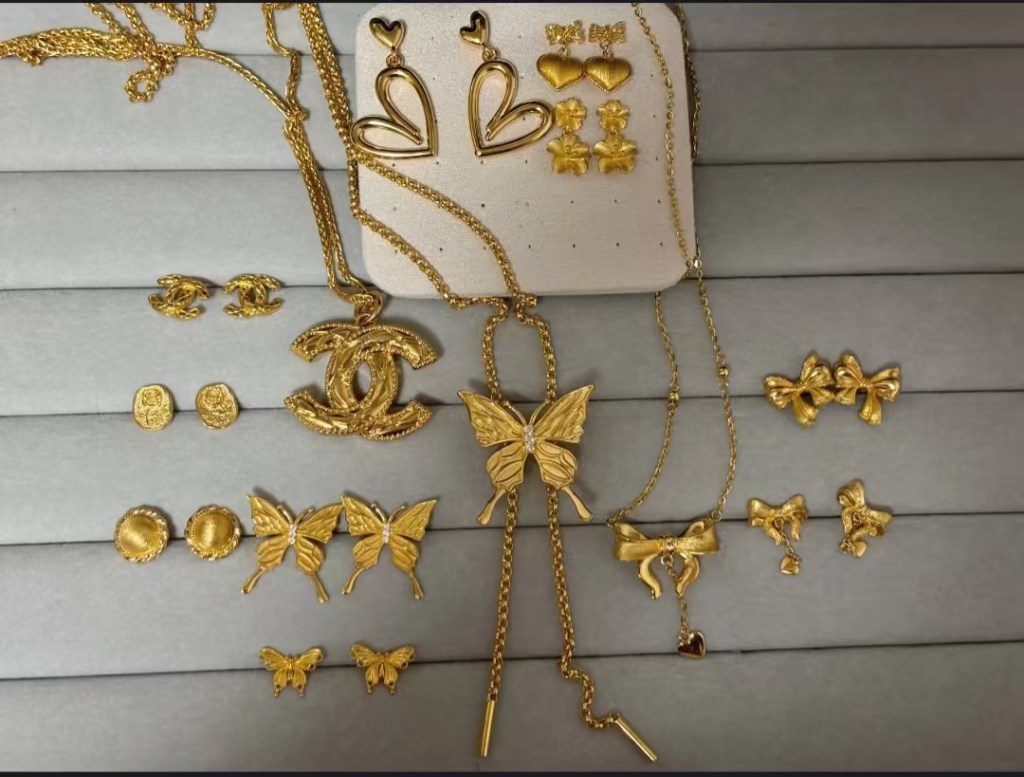
A Xiaohongshu user shows off her gold jewelry collection. Butterflies are hot right now.
What’s driving this shift? Call it cultural remixing. Take the zodiac pendants, for example: they’re not just trendy; they tell stories of harmony and cosmic compatibility. Designers are diving deeper into cultural archives, pulling out symbols like the copper lion—an ancient guardian of strength and prosperity—and giving them a wearable, modern spin. It’s heritage, but now it’s dripping in meaning and style.
Behind all this is some next-level craftsmanship. Today’s goldsmiths can pull off designs that were once pipe dreams—think intricate, hollow patterns and avant-garde shapes. Brands like the iconic Hong Kong-born Chow Tai Fook are even teaming up with cultural institutions like the Palace Museum, which is housed inside the Forbidden City–this one we know you know, dear reader– to blend history with high fashion. Gold isn’t just a material; it’s become a vessel of storytelling, connecting wearers to centuries of culture with every piece.
The takeaway? Gold’s cultural glow-up in China is more than skin-deep. It’s about breathing life into traditions, wrapping them in cutting-edge creativity, and making them irresistible for the new generation.
This “Gold Rush 2.0” isn’t just about wealth anymore—it’s about wearing your story, your heritage, and your future all in one razzle-dazzle piece.
Featured image: Collage of guzi and gold (images via Xiaohongshu)
SPOTTED A FASHION FAIL OR HAVE SOMETHING TO ADD? PLEASE LET US KNOW IN THE COMMENT SECTION BELOW OR EMAIL US AT INFO@CHINATEMPER.COM
© THE CHINA TEMPER, 2025. ALL RIGHTS RESERVED.
DO NOT REPRODUCE TEMPER CONTENT WITHOUT CONSENT -– YOU CAN CONTACT US AT INFO@CHINATEMPER.COM

Perpetually in pursuit of the greater good that is “China Fashion”, van Paridon set up The China Temper to help promote the dynamite dynamic fashion scene sprouting within Beijing, Shanghai, and China overall. Catering to anybody and everybody who reads English and/or Chinese, Temper covers all the basics and bases. From China's street style scenery to its budding photographers, internationally renowned designers, and underground quirks plus phenomena: We present one hot-hip-happening current collective weaving The New "Made in China" tag.
The term “Made in China” is undergoing the ultimate 21st Century makeover. Escorted by the increasingly strong influence of a new thinking among China’s younger generations, regarding individuality and the expression thereof, the fashion scene in the Middle Kingdom is exploding. And stretches far beyond what meets the eye. It’s appliqué, one might say.